Type
Knitting
Difficulty
beginner
Category
pullover
AI Thinking Process
Planning
Verification
Pattern
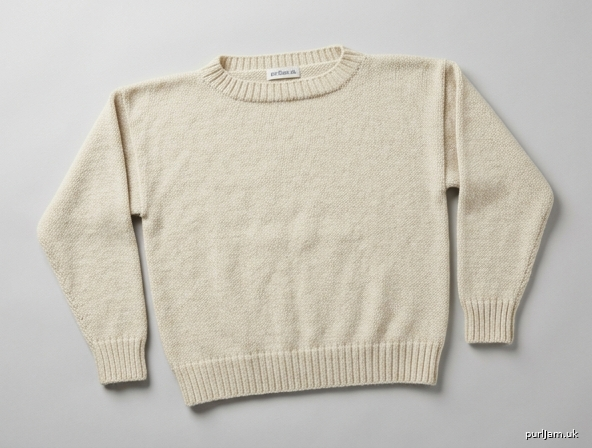
Boxy Boatneck Jumper
Men’s drop-shoulder pullover · worsted weight · knitted flat on straight needles
A relaxed, boxy jumper with dropped shoulders, a wide boatneck, and almost no shaping — designed for a first garment. Front and back are plain rectangles. Sleeves are worked flat and sewn to the straight armhole edge. The whole jumper is knitted on straight needles.
Skill level: Beginner
Sizes
S (M, L, XL, 2XL)
Instructions are given for the smallest size, with larger sizes in parentheses. When only one figure is given, it applies to all sizes. Size M (men’s medium) is the second figure.
To fit chest: 91–97 (102–107, 112–117, 122–127, 132–137) cm / 36–38 (40–42, 44–46, 48–50, 52–54) in
Shown/intended ease: approximately 13–18 cm (5–7 in) positive ease at the chest — a boxy, dropped-shoulder fit.
Finished measurements
- Chest circumference: 112 (120, 132, 140, 152) cm / 44 (47¼, 52, 55, 59¾) in
- Length (shoulder to hem): 68 (70, 72, 74, 76) cm / 26¾ (27½, 28¼, 29¼, 30) in
- Back/front width: 56 (60, 66, 70, 76) cm / 22 (23½, 26, 27½, 30) in
- Armhole depth: 24 (25.5, 27, 28.5, 30) cm / 9½ (10, 10¾, 11¼, 11¾) in
- Shoulder width (each): 18 (19, 21, 22, 24) cm / 7 (7½, 8¼, 8¾, 9½) in
- Boatneck width: 20 (22, 24, 26, 28) cm / 8 (8¾, 9½, 10¼, 11) in
- Sleeve length (underarm to cuff): 48 (49, 50, 51, 52) cm / 19 (19¼, 19¾, 20, 20½) in
- Sleeve top width: 48 (51, 54, 57, 60) cm / 19 (20, 21¼, 22½, 23½) in
Yarn
Worsted weight (10-ply) yarn; approximately 200 m / 218 yds per 100 g ball.
Metres: 1100 (1300, 1500, 1700, 1900) m / 1200 (1420, 1640, 1860, 2080) yds
Balls: 6 (7, 8, 9, 10) × 100 g
Wool or a wool-blend will hold the boxy shape and seam neatly. A smooth, light-coloured yarn makes stitches easier to see. Buy an extra ball if your tension is slightly loose or you lengthen the body.
Needles
- 1 pair 4 mm (UK 8 / US 6) straight needles
- 1 pair 4.5 mm (UK 7 / US 7) straight needles
Use 35 cm needles (or longer) so the body stitches sit comfortably, especially in the larger sizes.
Notions
- Tapestry needle
- Tape measure
- Scissors
- 4 locking stitch markers (or safety pins) for marking armholes
- Optional: stitch holders
Tension (gauge)
20 sts and 28 rows = 10 cm (4 in) over stocking stitch on 4.5 mm needles, after blocking.
Work a swatch at least 15 cm square, block it, and measure the centre 10 cm. If you have too many stitches to 10 cm, try a larger needle; too few, try a smaller needle. Matching tension is what makes the finished chest measurement true.
Abbreviations
k — knit
p — purl
st(s) — stitch(es)
st st — stocking stitch (RS knit, WS purl)
kfb — knit into the front and back of the stitch (1 st increased)
RS — right side
WS — wrong side
beg — beginning
cont — continue
foll — following
rem — remain(ing)
rep — repeat
meas — measures
Pattern notes
- The jumper is worked flat, in pieces, on straight needles, then seamed.
- Front and back are identical rectangles — there is no armhole shaping.
- The boatneck is formed by casting off the shoulder stitches and working a short 2×2 rib on the centre stitches. You do not pick up stitches around the neck.
- Sleeves are knitted from cuff to top and sewn to the straight side edges of the body.
- The first and last stitch of every row are selvedge stitches; use them for mattress stitch when seaming.
- Cast off the shoulders firmly so they do not stretch, and cast off the neckband loosely so it sits flat.
Back
With 4 mm needles, cast on 112 (120, 132, 140, 152) sts.
Rib row 1 (RS): *K2, p2; rep from * to end.
Rib row 2 (WS): *K2, p2; rep from * to end.
These 2 rows form 2×2 rib. Cont in rib until work meas 6 cm (2¼ in) from cast-on edge, ending with a WS row.
Change to 4.5 mm needles.
Next row (RS): Knit.
Next row (WS): Purl.
These 2 rows form stocking stitch. Cont in st st until back meas 68 (70, 72, 74, 76) cm / 26¾ (27½, 28¼, 29¼, 30) in from cast-on edge, ending with a WS row.
Shape shoulders and boatneck
Next row (RS): Cast off 36 (38, 42, 44, 48) sts, knit to end.
76 (82, 90, 96, 104) sts. (112 − 36 = 76 ✓; 120 − 38 = 82 ✓; 132 − 42 = 90 ✓; 140 − 44 = 96 ✓; 152 − 48 = 104 ✓)
Next row (WS): Cast off 36 (38, 42, 44, 48) sts, purl to end.
40 (44, 48, 52, 56) sts. (76 − 36 = 40 ✓; 82 − 38 = 44 ✓; 90 − 42 = 48 ✓; 96 − 44 = 52 ✓; 104 − 48 = 56 ✓)
Change to 4 mm needles.
Neckband row 1 (RS): *K2, p2; rep from * to end.
Neckband row 2 (WS): *K2, p2; rep from * to end.
Cont in 2×2 rib until neckband meas 3 cm (1¼ in), ending with a WS row. Cast off loosely in rib.
Front
Work as given for Back.
Sleeves (make 2)
With 4 mm needles, cast on 48 (52, 56, 60, 64) sts.
Rib row 1 (RS): *K2, p2; rep from * to end.
Rib row 2 (WS): *K2, p2; rep from * to end.
Cont in 2×2 rib until cuff meas 6 cm (2¼ in) from cast-on edge, ending with a WS row.
Change to 4.5 mm needles.
Next row (RS — increase row): K1, kfb, knit to last 2 sts, kfb, k1. 2 sts increased.
Next row (WS): Purl.
Rep the last 2 rows once more, then work 2 rows straight (knit 1 row, purl 1 row).
Cont to inc 1 st at each end of next row and every foll 4th row in this way (k1, kfb, knit to last 2 sts, kfb, k1 on RS; purl all WS rows) until there are 96 (102, 108, 114, 120) sts.
(Cuff 48 (52, 56, 60, 64) + 2 sts × 24 (25, 26, 27, 28) increase rows = 48 (52, 56, 60, 64) + 48 (50, 52, 54, 56) = 96 (102, 108, 114, 120) ✓)
Work without further shaping until sleeve meas 48 (49, 50, 51, 52) cm / 19 (19¼, 19¾, 20, 20½) in from cast-on edge, ending with a WS row.
Cast off.
Making up
Weave in ends that would be awkward after seaming. Block each piece to the measurements given, pinning the rectangles square, and leave to dry.
1. Shoulders
With RS together (or RS facing you if using mattress stitch), join the left shoulder seam, matching the 18 (19, 21, 22, 24) cm / 7 (7½, 8¼, 8¾, 9½) in cast-off shoulder edges of front and back. Repeat for the right shoulder. Use mattress stitch or backstitch. Do not sew the neckband yet.
2. Neckband sides
Join the 3 cm (1¼ in) side edges of the front and back neckbands, so the rib columns meet neatly at each shoulder. The boatneck opening is 20 (22, 24, 26, 28) cm / 8 (8¾, 9½, 10¼, 11) in wide.
3. Place armholes
On both front and back, measure 24 (25.5, 27, 28.5, 30) cm / 9½ (10, 10¾, 11¼, 11¾) in down from the shoulder seam along each side edge and mark with a locking marker. The distance between the two markers on one side is the armhole.
4. Set in sleeves
Matching the centre of the sleeve cast-off edge to the shoulder seam, sew the sleeve top between the armhole markers. The sleeve top is 48 (51, 54, 57, 60) cm / 19 (20, 21¼, 22½, 23½) in wide, which equals the front armhole plus the back armhole (24 × 2 = 48 ✓; 25.5 × 2 = 51 ✓; 27 × 2 = 54 ✓; 28.5 × 2 = 57 ✓; 30 × 2 = 60 ✓). Ease the sleeve in evenly; there is no sleeve cap.
5. Side and sleeve seams
Join the side seams from hem rib to the underarm marker, matching the rib. Then join each sleeve seam from cuff to underarm, matching the rib at the cuff. Mattress stitch gives the neatest result on stocking stitch.
Weave in remaining ends. Gently steam the seams if the fibre allows, or give the finished jumper a light re-block so the dropped shoulders sit square.
Schematic (key dimensions)
        |←  20 (22, 24, 26, 28) cm neck  →|
     ┌──┴──────────────────────────────────┴──┐  ← shoulder 18 (19, 21, 22, 24) cm each
     │                                        │
     │         FRONT / BACK                   │  length 68 (70, 72, 74, 76) cm
     │         56 (60, 66, 70, 76) cm wide    │
     │                                        │
     └────────────────────────────────────────┘
                    hem rib 6 cm

     Armhole depth 24 (25.5, 27, 28.5, 30) cm
     (sleeve sewn along this edge)

              cuff 6 cm
                 │
                / \
               /   \   ← increases every 4th row
              /     \
             /       \
            └─────────┘  sleeve top 48 (51, 54, 57, 60) cm
                         sleeve length 48 (49, 50, 51, 52) cm
To knit size M only (quick reference)
- Cast on 120 sts for back and front; work until 70 cm long.
- Cast off 38 sts at the beg of the next 2 rows; rib the remaining 44 sts for 3 cm and cast off loosely.
- Sleeves: cast on 52 sts; inc to 102 sts; work until 49 cm long.
- Armhole depth 25.5 cm; join 19 cm at each shoulder; leave 22 cm open for the boatneck.
Disclaimer: This pattern was generated by AI and should be reviewed for accuracy before use. While we strive for quality, AI-generated content may contain errors. Please verify measurements, stitch counts, charts, and instructions before beginning your project. Generated by purlJam.uk
Love this pattern?
Save this pattern to your free PurlJam libraryAccess your pattern anytime
Bookmark this page to access your pattern anytime