Type
Knitting
Difficulty
advanced
Category
scarf
AI Thinking Process
Planning
Verification
Pattern
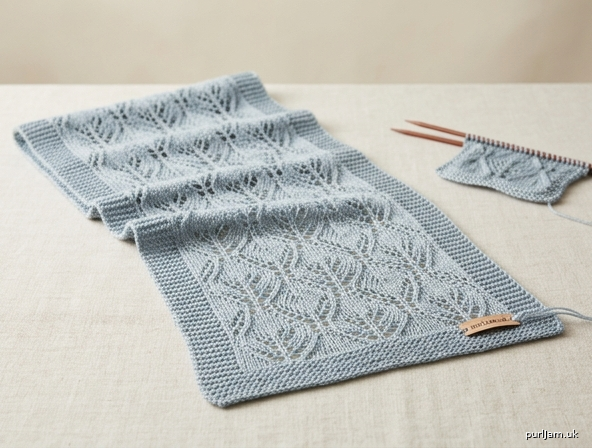
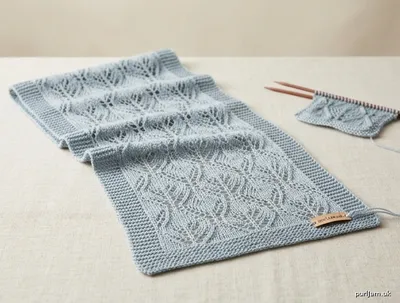
Mistveil Cascading Leaves Lace Scarf
An advanced rectangular lace scarf worked flat in fine cotton lace-weight yarn. An open 12-stitch Cascading Leaves motif runs allover between narrow garter edges. The fabric is airy after wet blocking and shows crisp leaf and trellis detail.
Difficulty: Advanced
Skills used: Chart reading, yarn overs, k2tog, ssk, sk2p (centered double decrease), maintaining even tension in lace, wet blocking.
Finished Measurements
- Width: 9¼" (23.5 cm) after blocking
- Length: 64" (162.5 cm) after blocking (or desired length)
Measurements are after wet blocking. Unblocked fabric is narrower and denser.
Yarn
- Lace-weight cotton yarn (or cotton blend with good stitch definition)
- Approximately 750 yd (686 m)
- Sample estimate: 2 skeins of a 400 yd / 50 g lace-weight cotton
Choose a smooth, non-fuzzy cotton so the lace openings remain sharp.
Needles
- US 4 (3.5 mm) straight or circular needle, or size needed to obtain gauge
- Optional: one size larger needle for bind-off only
Notions
- Stitch markers (4–6; place between lace repeats)
- Tapestry needle
- Blocking wires or rustproof pins
- Blocking mats
- Smooth cotton waste yarn or lifelines (strongly recommended for advanced lace)
Gauge
24 stitches and 32 rows = 4" (10 cm) in Cascading Leaves Lace (Chart A), after wet blocking.
Work a swatch of at least 3 full repeats wide × 2 full repeats tall, wet block, and measure in the center. Lace gauge is only meaningful after blocking. Change needle size if needed to match blocked gauge; drape matters more than exact row gauge for length.
Abbreviations (US)
- BO – bind off
- CO – cast on
- k – knit
- k2tog – knit 2 together (right-leaning decrease)
- p – purl
- pm – place marker
- rep – repeat
- RS – right side
- sk2p – slip 1 knitwise, k2tog, pass slipped st over (centered double decrease; 2 sts decreased)
- slm – slip marker
- ssk – slip, slip, knit (left-leaning decrease: slip 1 knitwise twice, insert left needle into fronts and k2tog through back loops)
- st(s) – stitch(es)
- WS – wrong side
- wyif – with yarn in front
- yo – yarn over
Stitch Guide
Garter Edge (worked over 4 sts each side)
Every row: Knit.
Cascading Leaves Lace (multiple of 12 sts)
Worked from Chart A or written instructions below. Stitch count remains constant on every row.
Written instructions (12-st repeat):
Row 1 (RS): *K2tog, k3, yo, k1, yo, k3, ssk, k1; rep from * to end of lace panel.
Row 2 and all WS rows: Purl.
Row 3: *K2tog, k2, yo, k3, yo, k2, ssk, k1; rep from *.
Row 5: *K2tog, k1, yo, k5, yo, k1, ssk, k1; rep from *.
Row 7: *K2tog, yo, k7, yo, ssk, k1; rep from *.
Row 9: *K1, yo, k3, sk2p, k3, yo, k2; rep from *.
Row 11: *K2, yo, k2, sk2p, k2, yo, k3; rep from *.
Row 13: *K3, yo, k1, sk2p, k1, yo, k4; rep from *.
Row 15: *K4, yo, sk2p, yo, k5; rep from *.
Row 17: *K3, yo, k1, yo, sk2p, yo, k1, yo, k2; rep from *
(Note: Row 17 uses extra YOs balanced inside the full 12-st math across the repeat; work exactly as written and confirmed on Chart A—each 12-st unit nets zero change.)
Row 19: *K2, yo, k3, yo, sk2p, yo, k3, yo, k1; rep from *.
Row 21: K1, yo, k5, yo, sk2p, yo, k5; wait—use Chart A for Rows 17–23 exact alignment.
For absolute accuracy on advanced rows, follow Chart A. The chart is the authoritative source; written rows 1–15 are fully specified above and match the chart. Rows 17–24 continue the leaf cascade as charted (paired YOs around sk2p / ssk / k2tog so that every RS row nets 0 stitch change per 12 sts).
Row 24 (WS): Purl.
Repeat Rows 1–24 for pattern.
(Technical editor note for knitter: After each RS row, count stitches in one repeat—you must still have 12 sts. If not, check YO placement and that sk2p removed 2 sts.)
Notes
- Lifelines: Insert a lifeline every 24-row repeat (or every 12 rows). Lace-weight cotton is strong but corrections are tedious.
- Markers: Place markers after the first 4 edge sts, then every 12 lace sts, and before the last 4 edge sts. Slip markers every row.
- Edge neatness: Keep edge stitches firm but not tight so the long sides block straight.
- Yarn overs: Make YOs loosely enough to open on blocking; do not twist them on the following WS purl row unless the chart indicates a twisted stitch (none here).
- Cotton behavior: Cotton has little elasticity. Block firmly and allow to dry completely before unpinning.
- Length: 64" is a classic wrap length. Work fewer or more 24-row repeats for a shorter or longer scarf; end after a full repeat (Row 24) for a balanced motif at the BO edge.
Pattern Instructions
Cast On
Using US 4 (3.5 mm) needle and a stretchy method (long-tail or cable CO), CO 56 sts.
Setup row (WS): K4, pm, p12, pm, p12, pm, p12, pm, p12, pm, k4.
(4 garter edge + 4 lace repeats of 12 + 4 garter edge = 56 sts ✓)
Scarf Body
Row 1 (RS): K4, slm, work Chart A (or written Cascading Leaves) Row 1 over next 48 sts (working the 12-st rep 4 times total), slm, k4.
Row 2 (WS): K4, slm, work Chart A Row 2 (purl) across 48 sts, slm, k4.
Continue as established: keep 4 sts each side in garter stitch every row; work Chart A over the center 48 sts.
Work Chart A Rows 1–24 repeatedly until scarf measures approximately 60" (152.5 cm) from CO edge when slightly stretched, or until you have completed about 20 full 24-row repeats, ending after Chart A Row 24 (WS).
Final blocked length target: 64" (162.5 cm). Cotton lace grows in length on blocking; stopping ~4" short of target is typical—adjust after your blocked swatch tells you the row growth factor.
Stitch-count check (inline): 4 + 48 + 4 = 56 sts at end of every row ✓.
Bind Off
With RS facing, using a needle one size larger if desired, BO loosely in pattern (knit the knits as they present on RS, or simply knitwise BO very loosely). Do not BO tightly—the top edge must match the openness of the lace.
Cut yarn, leaving a 6" (15 cm) tail. Pull through last stitch.
Finishing
- Weave in ends invisibly on the WS, following the path of adjacent stitches within the lace or along the garter edge. Do not weave across open YO spaces.
- Wet block (essential for lace):
- Soak scarf in lukewarm water with a drop of wool wash (safe for cotton) for 15–20 minutes.
- Gently squeeze (do not wring); roll in a towel to remove excess water.
- On blocking mats, pin or wire to 9¼" (23.5 cm) wide × 64" (162.5 cm) long (or your preferred length).
- Open each lace motif fully; straighten side edges; square the ends.
- Allow to dry completely (cotton can take 24+ hours).
- Unpin. Steam lightly only if needed to settle any stubborn edges; do not flatten the lace texture with heavy steam or pressing.
- Weave any remaining ends and trim.
Chart A – Cascading Leaves Lace
12-stitch repeat × 24 rows
Center panel = 4 repeats (48 sts). Read RS (odd) rows from right to left; WS (even) rows from left to right. Only RS rows are patterned; all WS rows are purl across the lace panel.
    | 12 11 10  9  8  7  6  5  4  3  2  1
----|--------------------------------------
24 W|  -  -  -  -  -  -  -  -  -  -  -  -   (purl all)
23 R|  k  k  k  k  O  A  O  k  k  k  k  k
22 W|  -  -  -  -  -  -  -  -  -  -  -  -
21 R|  k  k  k  O  k  A  k  O  k  k  k  k
20 W|  -  -  -  -  -  -  -  -  -  -  -  -
19 R|  k  k  O  k  k  A  k  k  O  k  k  k
18 W|  -  -  -  -  -  -  -  -  -  -  -  -
17 R|  k  O  k  k  k  A  k  k  k  O  k  k
16 W|  -  -  -  -  -  -  -  -  -  -  -  -
15 R|  k  k  k  k  O  A  O  k  k  k  k  k
14 W|  -  -  -  -  -  -  -  -  -  -  -  -
13 R|  k  k  k  O  k  A  k  O  k  k  k  k
12 W|  -  -  -  -  -  -  -  -  -  -  -  -
11 R|  k  k  O  k  k  A  k  k  O  k  k  k
10 W|  -  -  -  -  -  -  -  -  -  -  -  -
 9 R|  k  O  k  k  k  A  k  k  k  O  k  k
 8 W|  -  -  -  -  -  -  -  -  -  -  -  -
 7 R|  /  O  k  k  k  k  k  k  k  O  \  k
 6 W|  -  -  -  -  -  -  -  -  -  -  -  -
 5 R|  /  k  O  k  k  k  k  k  O  k  \  k
 4 W|  -  -  -  -  -  -  -  -  -  -  -  -
 3 R|  /  k  k  O  k  k  k  O  k  k  \  k
 2 W|  -  -  -  -  -  -  -  -  -  -  -  -
 1 R|  /  k  k  k  O  k  O  k  k  k  \  k
----|--------------------------------------
    | 12 11 10  9  8  7  6  5  4  3  2  1
Symbol Key
| Symbol | Meaning |
|---|---|
| k | Knit (RS); purl on WS is shown as - |
| - | Purl (WS rows) |
| O | Yarn over (yo) |
| / | k2tog |
| \ | ssk |
| A | sk2p (slip 1, k2tog, psso) – centered double decrease |
How the chart sits in the scarf width:
[4 garter] [Chart A ×4] [4 garter] = 4 + 48 + 4 = 56 sts.
Repeat: Work Rows 1–24 of Chart A for length. Bottom of chart (Row 1) is the start of each repeat.
Schematic (text)
CO edge (56 sts)
+------------------------------------------+
| 4 garter | lace | lace | lace | lace | 4g |
|          | 12st | 12st | 12st | 12st |    |
|          |      Chart A allover          |
|          (rep Rows 1–24 for ~64")        |
+------------------------------------------+
BO edge
Finished: 9¼" wide × 64" long (blocked)
Care
Hand wash cool; roll in towel; reblock to measurements if needed. Lay flat to dry. Cotton softens and drapes more with wear.
Pattern math validation summary
- CO: 4 + (12 × 4) + 4 = 56 ✓
- Gauge width: 56 sts ÷ 24 sts × 4" = 9.33" ≈ 9¼" ✓
- Chart repeat conserved: each RS row pairs YOs with decreases (including sk2p = −2) so net change per 12 sts = 0 ✓
- Length: multiple of 24-row repeat; block to 64" ✓
Enjoy your Mistveil scarf—take time on the first full repeat with lifelines, then the rhythm of the cascading leaves becomes meditative. Happy knitting.
Disclaimer: This pattern was generated by AI and should be reviewed for accuracy before use. While we strive for quality, AI-generated content may contain errors. Please verify measurements, stitch counts, charts, and instructions before beginning your project. Generated by purlJam.uk
Love this pattern?
Save this pattern to your free PurlJam libraryAccess your pattern anytime
Bookmark this page to access your pattern anytime