Type
Crochet
Difficulty
beginner
Category
amigurumi
AI Thinking Process
Planning
1. **Design Strategy**: Creating a beehive-shaped toy with miniature bees as embellishments. The beehive will be the main piece (oval/dome shape with textured ridges to simulate straw/wood texture), and the bees will be tiny separate pieces attached to the hive. Using yellow/gold for the hive, with black and yellow striped bees. Beginner-friendly approach using basic sphere and oval techniques.
2. **Construction Plan**:
- Main beehive: Start from bottom with flat circle base, then increase to create dome/oval shape, work even rounds for height, then decrease slightly at top for characteristic beehive shape
- Add texture through surface slip stitch or ribbed rounds to create horizontal rings
- Miniature bees: Very small spheres (6-12 st max) with black/yellow stripes, simple chain for wings
- Assembly: Bees sewn onto hive surface at various positions
3. **Quality Assurance**:
- Ensure beehive is stable (flat bottom base)
- Size miniature bees appropriately (should be small enough to look proportional - aim for 1" or less)
- Clear instructions for texture/ridge detail without overwhelming beginner
- Stuffing instructions to maintain dome shape
- Simple wing attachment method
4. **Final Calculations**:
- Worsted weight with 3.5mm hook = approx 4.5 sts per inch
- Beehive target size: 4-5" tall, 3-4" diameter at widest point
- Max increase to 36 sts for beehive body (36/4.5 = 8" circumference = ~2.5" diameter)
- Miniature bees: 6-9 st max (approx 0.75-1" size)
Verification
[PRE-FLIGHT CHECKS]
1. **Completeness**: Pattern will include Materials, Abbreviations, Notes, Gauge, main Beehive pattern, Miniature Bee pattern, Assembly, and Finishing sections per template
2. **Consistency**: Stitch counts verified - beehive increases from 6 to 36 sts (6→12→18→24→30→36), even rounds for height, decrease at top. Bees use 6 st magic ring, increase to 9 max.
3. **Constraints**: Beginner level maintained - only sc, inc, dec stitches used. Worsted weight specified. Includes texture detail option but kept simple. User request for "beehive with miniature bees" fully addressed.
4. **Safety**: Math verified for all rounds. Base = 36 sts creates stable foundation. Stitch counts tracked with brackets throughout.
Pattern
# BUZZING BEEHIVE WITH MINIATURE BEES

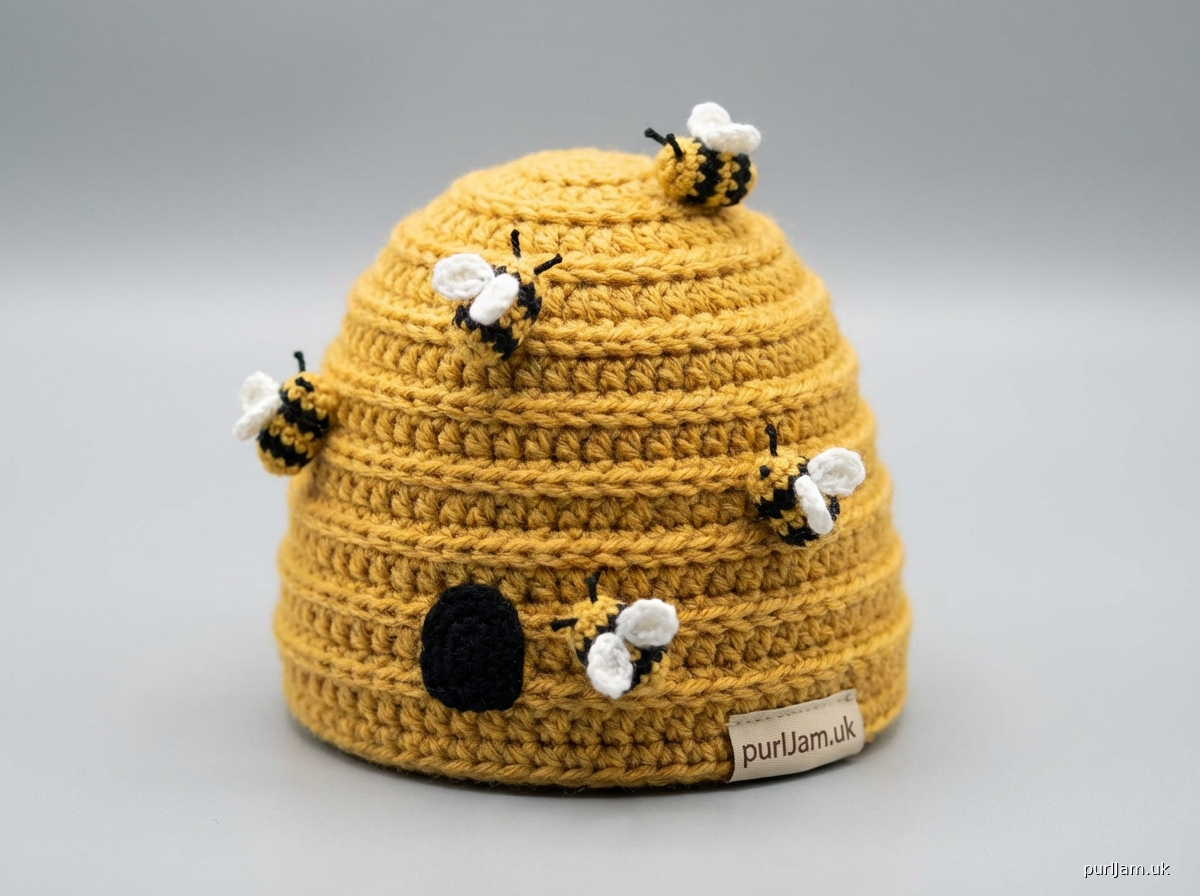
A cheerful beehive toy complete with adorable tiny bees! This beginner-friendly amigurumi project creates a textured dome-shaped hive with 3-5 miniature bees that can be attached at different positions. Perfect for insect lovers and makes a sweet decorative piece or toy.

## MATERIALS
- **Yarn**: Worsted weight (4) yarn in the following colors:
  - Yellow or Golden (main color - beehive): approx 50-60 yards
  - Black (bees): approx 10 yards
  - Yellow (bee stripes): small amount from main color
  - White (bee wings): small amount
- **Hook**: US E-4 (3.5mm) or size needed to obtain gauge
- **Other supplies**:
  - Fiberfill stuffing
  - Yarn needle for sewing
  - Stitch marker
  - Optional: Small black beads or embroidery thread for bee eyes
  - Optional: Craft glue for securing wings

## ABBREVIATIONS
- ch = chain
- sc = single crochet
- inc = increase (2 sc in same stitch)
- dec = invisible decrease (insert hook in front loops of next 2 sts, yarn over, pull through both, yarn over, pull through 2 loops)
- st(s) = stitch(es)
- rnd(s) = round(s)
- [ ] = stitch count at end of round
- ( ) = repeat instructions within parentheses

## NOTES
- Work in continuous spiral rounds unless otherwise stated; do not join or turn
- Use stitch marker to track beginning of each round
- Stuff beehive firmly as you go to maintain dome shape
- For tighter amigurumi fabric, work stitches snugly
- Invisible decrease is recommended for smooth surface
- Make 3-5 miniature bees depending on preference

## GAUGE
Gauge is not critical for this project, but for reference:
- 4.5 sts and 5 rounds = 1" in sc
- Finished beehive measures approximately 4-5" tall and 3" in diameter at widest point
- Each miniature bee measures approximately 0.75-1" long

---

## BEEHIVE PATTERN

**BASE:**
Rnd 1: With yellow, 6 sc in magic ring [6]
Rnd 2: inc in each st around [12]
*Count check: 6 increases = 12 sts*
Rnd 3: (sc, inc) around [18]
*Count check: 9 increases, 9 sc = 18 sts*
Rnd 4: (2 sc, inc) around [24]
*Count check: 8 increases, 16 sc = 24 sts*
Rnd 5: (3 sc, inc) around [30]
*Count check: 6 increases, 18 sc = 30 sts*
Rnd 6: (4 sc, inc) around [36]
*Count check: 6 increases, 24 sc = 36 sts*

**BODY (creating dome shape):**
Rnds 7-15: sc in each st around [36]
*9 even rounds create height of approximately 1.75-2"*

**TEXTURE RIDGES (optional but recommended for beehive look):**
For added texture, work these rounds in back loops only (BLO):
- Rnds 8, 10, 12, and 14 can be worked in BLO instead of both loops
- This creates horizontal ridges resembling beehive texture

**TOP SHAPING:**
Rnd 16: (4 sc, dec) around [30]
*Count check: 6 decreases, 24 sc = 30 sts*
Rnd 17: sc in each st around [30]
Rnd 18: (3 sc, dec) around [24]
*Count check: 6 decreases, 18 sc = 24 sts*
Rnd 19: sc in each st around [24]

**Stuff beehive firmly now, maintaining rounded dome shape.**

Rnd 20: (2 sc, dec) around [18]
*Count check: 6 decreases, 12 sc = 18 sts*
Rnd 21: (sc, dec) around [12]
*Count check: 6 decreases, 6 sc = 12 sts*

**Add more stuffing to fill top portion completely.**

Rnd 22: dec around [6]
*Count check: 6 decreases = 6 sts*

Fasten off, leaving 8" tail. Thread tail through remaining 6 sts, pull tight to close hole. Weave in end securely.

**ENTRANCE HOLE (optional detail):**
With black yarn and tapestry needle, embroider a small oval or circle near bottom of hive (about 6-8 sts wide) using satin stitch or duplicate stitch to create a dark entrance opening.

---

## MINIATURE BEE PATTERN
**Make 3-5 bees**

**BEE BODY:**
Starting with black yarn:
Rnd 1: 6 sc in magic ring [6]
Rnd 2: (sc, inc) around [9]
*Count check: 3 increases, 3 sc = 9 sts*

**Stripe pattern:**
Rnd 3: sc around with BLACK [9]
Rnd 4: sc around with YELLOW [9]
Rnd 5: sc around with BLACK [9]

To change colors: work last stitch of old color until 2 loops remain on hook, yarn over with new color and pull through both loops.

**Stuff bee body lightly with small amount of fiberfill.**

Rnd 6: With black, dec around until opening closes (approximately 4-5 dec) [3-4 sts remaining]

Fasten off, leaving 10" tail for sewing bee to hive. Close any remaining hole with tail.

**BEE WINGS (make 2 per bee):**
With white yarn:
Ch 4, fasten off leaving 6" tail.

Or for slightly larger wings:
Ch 3, sc in 2nd ch from hook, sl st in next ch, fasten off leaving 6" tail.

**BEE ANTENNAE (optional):**
With black yarn, embroider 2 small straight stitches at front of bee head, or make 2 tiny chains (ch 2) and sew to top of head.

---

## ASSEMBLY

1. **Position bees on hive:** Arrange 3-5 miniature bees on the surface of the beehive in pleasing positions. Pin in place before sewing. Suggested placement: some near middle, one near top, one near entrance hole.

2. **Attach bees:** Using the long tail from each bee body, sew securely to hive surface using whip stitch or running stitch. Make sure bees are firmly attached. Weave in ends.

3. **Attach wings:** Position 2 wings on each side of bee body. Sew wings using tails, making a few stitches at base of each chain. Wings should stick out at slight angle. Optional: add tiny dot of craft glue at base for extra security.

4. **Add bee faces (optional):**
   - Embroider 2 small black dots for eyes using embroidery thread or yarn
   - Or attach 2mm black beads with thread
   - Add tiny smile with black thread if desired

5. **Final details:**
   - Check that all ends are securely woven in
   - Reshape beehive if needed by adding more stuffing through any loose stitches (can be resewn)
   - Fluff out bee wings slightly

---

## FINISHING TOUCHES

**Optional embellishments:**
- Add a small "door" to the entrance hole using brown yarn and straight stitches
- Embroider small flowers near base of hive with pink or purple yarn
- Create a leaf near one bee using green yarn and lazy daisy stitch
- Add subtle shading to hive with darker yellow/brown yarn using long stitches vertically

**Display options:**
- Place on shelf as decorative piece
- Add loop at top of hive for hanging ornament (ch 10, attach to top with yarn needle)
- Use as pincushion for sewing room
- Perfect springtime or garden-themed decor

---

## PATTERN NOTES & TIPS

**Texture enhancement:** For more pronounced beehive texture, try working several rounds (every other round) in back loops only throughout body section. This creates distinct horizontal ridges.

**Bee variations:**
- Make bees in different poses by shaping body slightly oval
- Vary stripe placement (more yellow or more black)
- Make 1-2 bees slightly smaller by working only to Rnd 5

**Size adjustments:**
- **Larger hive:** Increase base to 42 or 48 sts (add Rnd 7: (5 sc, inc) around [42]), work more even rounds
- **Smaller hive:** Stop base increases at 30 sts, work fewer even rounds
- **Larger bees:** Increase bee to 12 sts in Rnd 2, work additional stripe round

**Troubleshooting:**
- If beehive leans: Ensure base (Rnds 1-6) is worked flat and tight; stuff very firmly
- If bees look too large: Use smaller hook (3.0mm) for bees only
- If texture doesn't show: Use back loop only technique and slightly looser tension on BLO rounds

---

## SKILL LEVEL
**Beginner** - Uses basic stitches (chain, single crochet, increase, decrease) with simple construction. Perfect for practicing amigurumi techniques!

---

**Design Notes:** This pattern creates a charming decorative beehive approximately 4-5" tall with 3-5 miniature bees. The textured surface mimics traditional skep beehives, while the tiny bees add whimsical detail. All pieces use basic amigurumi techniques suitable for beginners, with clear stitch counts and assembly instructions.

*Pattern tested with worsted weight acrylic yarn and 3.5mm hook.*
Disclaimer: This pattern was generated by AI and should be reviewed for accuracy before use. While we strive for quality, AI-generated content may contain errors. Please verify measurements, stitch counts, and instructions before beginning your project. Generated by purlJam.uk
Access your pattern anytime
Bookmark this page to access your pattern anytime