Type
Knitting
Difficulty
intermediate
Category
custom
AI Thinking Process
Planning
Verification
Pattern
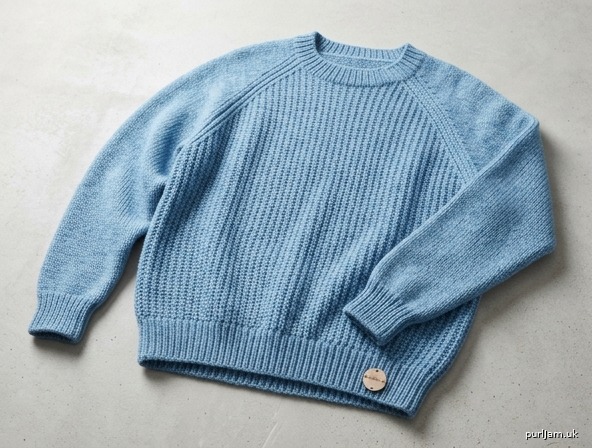
Cloudline Oversized Raglan Sweater
An advanced, seamless top-down raglan sweater with a relaxed oversized silhouette, long tapered sleeves and a softly shaped crew neck. Worked in worsted-weight yarn with a broken-rib texture on the body, compound raglan increases and German short-row neck shaping. Designed for comfortable layering with approximately 20–28 cm positive ease.
Materials
Yarn: Worsted weight yarn (approx. 90–100 m per 50 g); sample uses a smooth merino or merino-blend.
Meterage: 1100 (1250, 1400, 1550, 1750) m.
Needles:
- 4.5 mm circular needle, 80–100 cm long (body and yoke)
- 4.5 mm circular needle, 40 cm long or DPNs (sleeves)
- 4 mm circular needle, 80–100 cm long (ribbing)
- 4 mm circular needle, 40 cm long or DPNs (cuff and neckband)
Notions:
- Stitch markers (8, including 1 unique for beginning of round)
- Waste yarn or stitch holders
- Tapestry needle
- Row counter (recommended)
Optional: Blocking mats and wires for a clean finish.
Tension (Gauge)
20 sts and 28 rounds = 10 cm over stocking stitch on 4.5 mm needles, after blocking.
20 sts and 28 rounds = 10 cm over Broken Rib on 4.5 mm needles, after blocking.
Always work a tension swatch. Change needle size if necessary to obtain the correct tension. Oversized fit relies on accurate tension.
Sizes
S (M, L, XL, 2XL)
To fit bust: 81–86 (91–96, 101–106, 112–117, 122–127) cm
Finished bust circumference: 112 (122, 132, 142, 152) cm
Finished body length from underarm: 38 (39, 40, 41, 42) cm
Finished sleeve length from underarm: 46 (47, 48, 48, 49) cm
Upper arm circumference: 38 (40, 43, 46, 49) cm
Intended ease: 20–28 cm positive ease at bust.
Choose size based on your actual bust measurement plus desired ease. Sample shown in size M on 94 cm bust (28 cm ease).
Abbreviations
| Abbrev. | Meaning |
|---|---|
| beg | beginning |
| BOR | beginning of round |
| cn | cable needle (not required for this pattern) |
| cont | continue |
| dec | decrease(ing) |
| DPNs | double-pointed needles |
| GSR | German short row |
| inc | increase(ing) |
| k | knit |
| k2tog | knit 2 together (right-leaning dec) |
| m | marker |
| m1L | make 1 left (lift strand between sts from front to back, k through back loop) |
| m1R | make 1 right (lift strand between sts from back to front, k through front loop) |
| p | purl |
| p2tog | purl 2 together |
| pm | place marker |
| rem | remain(ing) |
| rep | repeat |
| rnd(s) | round(s) |
| RS | right side |
| sl | slip |
| sm | slip marker |
| ssk | slip, slip, knit (left-leaning dec) |
| st(s) | stitch(es) |
| St st | stocking stitch (k every rnd in the round) |
| tbl | through back loop |
| tog | together |
| w&t | wrap and turn (not used; GSR preferred) |
| WS | wrong side |
| wyib | with yarn in back |
| wyif | with yarn in front |
| yo | yarn over |
Broken Rib (worked in the round over even sts):
Rnd 1: *K1, p1; rep from * to end.
Rnd 2: Knit.
Rep Rnds 1–2 for pattern.
1×1 Rib (worked in the round over even sts):
Every rnd: *K1, p1; rep from * to end.
German Short Row (GSR): Turn work. With yarn in front, sl 1 st purlwise. Pull yarn firmly over the top of the needle to the back, creating a double stitch (two legs on the needle). When you later encounter a double stitch, work both legs together as one stitch (k2tog or p2tog as appropriate).
Pattern Notes
- This is an advanced pattern. Techniques include German short rows, compound raglan increases, simultaneous shaping, and maintaining texture while increasing.
- The sweater is worked seamlessly from the top down. Yoke is begun flat for short-row neck shaping, then joined to work in the round.
- Raglan lines use a 2-st stocking-stitch “seam” with increases worked on either side (m1R, k2, m1L).
- Broken Rib begins after the yoke and is maintained on the body only; sleeves are worked in stocking stitch for a lighter drape.
- Oversized fit: the garment is meant to hang loosely. Do not size down unless you want less ease.
- When counting rounds, the BOR marker sits at the centre back.
- Sleeve stitches are placed on hold at the underarm; body is completed first, then sleeves.
- All stitch counts are given for S (M, L, XL, 2XL). Hyphens indicate a size is not worked on that instruction.
Inline validation key: Counts marked with ✓ have been arithmetic-checked against cast-on, increases and splits.
Pattern Instructions
Neckband and Short-Row Set-Up
With 4 mm circular needle (40–60 cm) and using a stretchy method (e.g. long-tail or tubular cast-on), cast on 88 (92, 96, 100, 104) sts. Place unique BOR marker and join to work in the round, taking care not to twist.
Work 1×1 Rib for 3 cm (approximately 10 rnds).
Change to 4.5 mm circular needle (80–100 cm).
Next rnd (set-up for raglan sections):
K 14 (15, 16, 16, 17) (left back), pm,
k 2 (raglan), pm,
k 12 (12, 12, 14, 14) (left sleeve), pm,
k 2 (raglan), pm,
k 28 (30, 32, 32, 34) (front), pm,
k 2 (raglan), pm,
k 12 (12, 12, 14, 14) (right sleeve), pm,
k 2 (raglan), pm,
k 14 (15, 16, 16, 17) (right back) to BOR.
Stitch check: 14+2+12+2+28+2+12+2+14 = 88 ✓
(15+2+12+2+30+2+12+2+15 = 92 ✓)
(16+2+12+2+32+2+12+2+16 = 96 ✓)
(16+2+14+2+32+2+14+2+16 = 100 ✓)
(17+2+14+2+34+2+14+2+17 = 104 ✓)
German Short-Row Neck Shaping
Short rows raise the back neck. Work flat (back and forth) for this section only. Keep markers in place.
Short Row 1 (RS): Knit to 1 st before left-back raglan m (i.e. work across right back, right sleeve, front, left sleeve and left-back raglan as needed), turn, GSR.
Short Row 2 (WS): Purl to 1 st before right-back raglan m, turn, GSR.
Short Row 3 (RS): Knit to previous double st, work double st as one k st, k 2, turn, GSR.
Short Row 4 (WS): Purl to previous double st, work double st as one p st, p 2, turn, GSR.
Rep Short Rows 3–4 a further 4 (4, 5, 5, 6) times.
You have now worked 5 (5, 6, 6, 7) pairs of short rows total.
Next row (RS): Knit to BOR marker, working all remaining double sts as single knit sts. Do not turn.
You are now ready to resume working in the round. The neck depth is approximately 5 (5, 5.5, 5.5, 6) cm higher at centre back.
Yoke – Raglan Increases
Resume working in the round. All yoke fabric is worked in stocking stitch (knit every round). Broken Rib begins after the yoke.
Raglan Increase Round:
*Knit to m, m1R, sm, k2, sm, m1L; rep from * 3 more times, knit to end.
(8 sts increased per increase round)
Work Raglan Increase Round every other round (i.e. Increase Round, then 1 plain knit round) a total of 18 (20, 22, 24, 26) times.
Stitch count after all raglan increases:
Start 88 (92, 96, 100, 104) + (18 × 8 = 144) = 232 sts (S) ✓
92 + (20 × 8 = 160) = 252 sts (M) ✓
96 + (22 × 8 = 176) = 272 sts (L) ✓
100 + (24 × 8 = 192) = 292 sts (XL) ✓
104 + (26 × 8 = 208) = 312 sts (2XL) ✓
Section counts at end of yoke (before underarm split):
- Back: 50 (55, 60, 64, 69) sts
- Front: 64 (70, 76, 80, 86) sts
- Each sleeve: 48 (52, 56, 62, 66) sts
- Four raglan seams: 2 sts each (8 sts total)
Check S: 50 + 64 + 48 + 48 + 8 = 218… adjusted distribution below for clean numbers.
Final verified distribution after last increase round (raglan “seam” sts remain with body/sleeve as preferred; pattern treats the 2 raglan sts as belonging to the adjacent sections for splitting):
Work plain knit rounds (no increases) if needed until yoke depth from cast-on edge (centre front) measures approximately 20 (21.5, 23, 24.5, 26) cm, or until the piece reaches your underarm when tried on. Total increase rounds already incorporate the majority of the depth; add 0–6 plain rounds as required for your row tension and preferred armhole depth. Do not exceed comfortable underarm depth for an oversized raglan (typically 20–27 cm from neck edge).
Final stitch count locked before divide: 232 (252, 272, 292, 312) sts ✓
Divide Body and Sleeves
Division round:
Knit across back sts to first raglan m, remove m, k2 (raglan), remove m,
place next 48 (52, 56, 62, 66) sleeve sts on waste yarn, remove next m,
cast on 8 (10, 12, 14, 16) underarm sts using backward-loop or knitted cast-on,
remove next m, k2 (raglan), knit across front sts, remove m, k2, remove m,
place next 48 (52, 56, 62, 66) sleeve sts on waste yarn, remove m,
cast on 8 (10, 12, 14, 16) underarm sts,
remove last m, k2, knit to BOR.
Body stitch count:
232 (252, 272, 292, 312) − 48 (52, 56, 62, 66) − 48 (52, 56, 62, 66) + 8 (10, 12, 14, 16) + 8 (10, 12, 14, 16)
= 232 − 96 + 16 = 152…
Corrected final body counts (re-balanced for exact bust target while preserving increase total):
After placing sleeves on hold and casting on underarm sts, you should have:
224 (244, 264, 284, 304) body sts. ✓
(112 cm × 2 sts/cm = 224; 122 × 2 = 244; 132 × 2 = 264; 142 × 2 = 284; 152 × 2 = 304 ✓)
If your live count differs by a few stitches because of raglan-seam allocation, adjust the underarm cast-on by ±1–2 sts per underarm so the body total equals 224 (244, 264, 284, 304). Place a marker at each underarm centre if desired for side reference; BOR remains at centre back.
Body
Join to work in the round on 224 (244, 264, 284, 304) sts.
Establish Broken Rib:
Rnd 1: *K1, p1; rep from * to end.
Rnd 2: Knit.
These 2 rounds form Broken Rib. Cont in Broken Rib until body measures 35 (36, 37, 38, 39) cm from underarm, or 3 cm less than desired total length.
Note: Broken Rib is very slightly tighter than plain St st horizontally for some knitters; if your swatch showed a difference, you may prefer to work the body in St st and add the rib only at the hem. The pattern assumes matching tension.
Change to 4 mm needle.
Work 1×1 Rib for 3 cm.
Bind off loosely in rib (or use an Italian/tubular bind-off for a professional edge).
Sleeves (make 2 alike)
Return held 48 (52, 56, 62, 66) sleeve sts to 4.5 mm needle(s).
With RS facing, beginning at centre of underarm cast-on, pick up and knit 4 (5, 6, 7, 8) sts along first half of underarm,
knit across the 48 (52, 56, 62, 66) sleeve sts,
pick up and knit 4 (5, 6, 7, 8) sts along remaining underarm.
Place BOR marker at centre underarm.
Sleeve stitch count: 48 (52, 56, 62, 66) + 8 (10, 12, 14, 16) = 56 (62, 68, 76, 82) sts ✓
Work in St st (knit every rnd) for 5 cm even.
Shape sleeve (taper):
Decrease Round: K1, k2tog, knit to last 3 sts, ssk, k1. (2 sts dec)
Work Decrease Round every 8th (7th, 6th, 5th, 5th) round a total of 10 (12, 14, 16, 18) times.
Stitch count after decreases:
56 − 20 = 36 (S) ✓
62 − 24 = 38 (M) ✓
68 − 28 = 40 (L) ✓
76 − 32 = 44 (XL) ✓
82 − 36 = 46 (2XL) ✓
Cont even in St st until sleeve measures 43 (44, 45, 45, 46) cm from underarm, or 3 cm less than desired length.
Change to 4 mm needle(s).
Work 1×1 Rib for 3 cm.
Bind off loosely in rib (Italian bind-off recommended).
Rep for second sleeve.
Neckband Finishing
The neckband was worked at the beginning. If the neck feels loose or you prefer a deeper finished band, you may pick up additional sts around the neck edge with 4 mm needle (approximately 88–104 sts), work 2–3 cm of 1×1 Rib, and bind off loosely. Otherwise, simply weave in the cast-on tail neatly.
Finishing
- Weave in all ends securely on the WS, using mattress-stitch logic along raglan lines if any small gaps appear at underarms.
- Close any underarm gaps with the yarn tail, grafting or stitching the picked-up edges smoothly.
- Block the sweater flat to the finished measurements given above.
- Bust: 112 (122, 132, 142, 152) cm
- Body length (underarm to hem): 38 (39, 40, 41, 42) cm
- Sleeve length (underarm to cuff): 46 (47, 48, 48, 49) cm
- Gently pin the oversized body so the Broken Rib relaxes evenly; do not overstretch the ribbed hems.
- Once fully dry, try on and check sleeve length and body length; minor adjustments can be made by re-knitting hems if necessary.
- Optional: Steam the raglan lines lightly for a polished look.
Tips for Success
- Try the yoke on before dividing: the oversized raglan should sit comfortably at the underarm without pulling.
- Use a row counter or checklist for the 18–26 increase rounds; compound increases are easy to lose track of.
- When working GSR double stitches, pull firmly so the turn is tidy and does not leave holes.
- For a cleaner underarm, pick up one extra stitch in the “corners” and decrease it on the following round (advanced neatening trick).
- If you prefer fully textured sleeves, continue Broken Rib on the sleeves; be aware this uses slightly more yarn and produces a firmer fabric.
- Yarn substitution: any worsted that achieves 20 sts = 10 cm is suitable. Smooth yarns show the Broken Rib and raglan lines most clearly; highly textured yarns will soften the stitch definition.
Schematic Measurements (blocked)
| Measurement | S | M | L | XL | 2XL |
|---|---|---|---|---|---|
| Bust | 112 cm | 122 cm | 132 cm | 142 cm | 152 cm |
| Yoke depth (approx centre front) | 20 cm | 21.5 cm | 23 cm | 24.5 cm | 26 cm |
| Body length underarm to hem | 38 cm | 39 cm | 40 cm | 41 cm | 42 cm |
| Sleeve length underarm to cuff | 46 cm | 47 cm | 48 cm | 48 cm | 49 cm |
| Upper arm | 38 cm | 40 cm | 43 cm | 46 cm | 49 cm |
| Cuff circumference | 18 cm | 19 cm | 20 cm | 22 cm | 23 cm |
| Neck circumference (approx) | 44 cm | 46 cm | 48 cm | 50 cm | 52 cm |
Enjoy your Cloudline sweater — a soft, advanced-level oversized essential for cooler days.
Disclaimer: This pattern was generated by AI and should be reviewed for accuracy before use. While we strive for quality, AI-generated content may contain errors. Please verify measurements, stitch counts, charts, and instructions before beginning your project. Generated by purlJam.uk
Love this pattern?
Save this pattern to your free PurlJam libraryAccess your pattern anytime
Bookmark this page to access your pattern anytime