Type
Knitting
Difficulty
beginner
Category
scarf
AI Thinking Process
Planning
Verification
Pattern
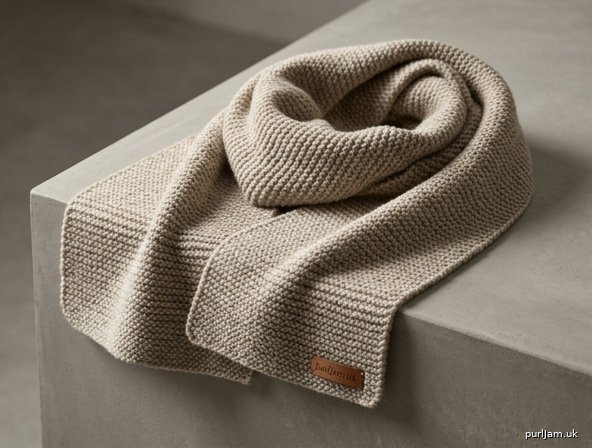
Woman’s Garter Stitch Scarf
A simple rectangular scarf in garter stitch, worked flat in one piece. There is only one stitch to learn, both sides look the same, and the edges lie flat. One size.
Materials
- Worsted weight yarn (aran / 10-ply): 300 g / approximately 600 metres (656 yards), based on a typical yield of 200 metres per 100 g. If your yarn has a shorter metreage, buy extra so you do not run short.
- 4.5 mm (US 7) knitting needles, or the size needed to obtain tension. A 5.0 mm (US 8) needle may be used only if required to match tension.
- Tapestry needle
- Scissors
Tension
18 stitches and 36 rows = 10 cm (4 inches) over garter stitch, after a gentle block.
Work a square of at least 22 stitches and 40 rows before you begin. If you have more than 18 stitches to 10 cm, change to a larger needle. If you have fewer than 18 stitches to 10 cm, change to a smaller needle. Length is measured as you knit, so a small difference in row tension will not spoil the scarf, provided you stop at 150 cm.
Finished Size
- Width: 20 cm (8 inches)
- Length: 150 cm (59 inches)
36 stitches ÷ 18 stitches × 10 cm = 20 cm wide ✓
Abbreviations
- k — knit
- cm — centimetres
- in — inches
- st(s) — stitch(es)
- RS — right side
- WS — wrong side
Pattern
The scarf is worked back and forth in rows from one short end to the other. Every row is knitted. Garter stitch is reversible; either face may be worn outwards.
- With 4.5 mm needles and the long-tail method, cast on 36 sts. (20 cm ÷ 10 cm × 18 sts = 36 sts ✓.)
- After a few rows, check the width. 36 sts should measure 20 cm (8 in) across. If they do not, start again on a different needle size before continuing.
- Row 1 (RS): K all sts.
- Row 2 (WS): K all sts.
- Repeat Row 2 — that is, knit every row — until the scarf measures 150 cm (59 in) from the cast-on edge. Measure along the centre, with the fabric gently smoothed and not stretched. At the stated tension this is about 540 rows. (150 cm ÷ 10 cm × 36 rows = 540 rows ✓.) The measured length takes priority over the row count.
- Cast off knitwise in pattern, keeping the same tension as the body of the scarf. Do not cast off tightly. 36 sts are cast off and none remain ✓. The cast-off edge should match the cast-on edge in width, about 20 cm (8 in).
Finishing
- Cut the yarn, leaving a tail of about 15 cm (6 in), and draw it through the last stitch.
- Weave in all ends with a tapestry needle for about 5 cm (2 in), then turn and weave back a short way so the tails stay put. Either face may be treated as the reverse.
- Blocking is optional. If you wish, soak or steam the scarf, then lay it flat to 20 cm × 150 cm (8 × 59 in) and leave it to dry. Do not pull the width out, or the garter ridges will flatten.
- No seaming is required. The scarf is ready to wear.
Disclaimer: This pattern was generated by AI and should be reviewed for accuracy before use. While we strive for quality, AI-generated content may contain errors. Please verify measurements, stitch counts, charts, and instructions before beginning your project. Generated by purlJam.uk
Love this pattern?
Save this pattern to your free PurlJam libraryAccess your pattern anytime
Bookmark this page to access your pattern anytime