Type
Knitting
Difficulty
advanced
Category
cardigan
AI Thinking Process
Planning
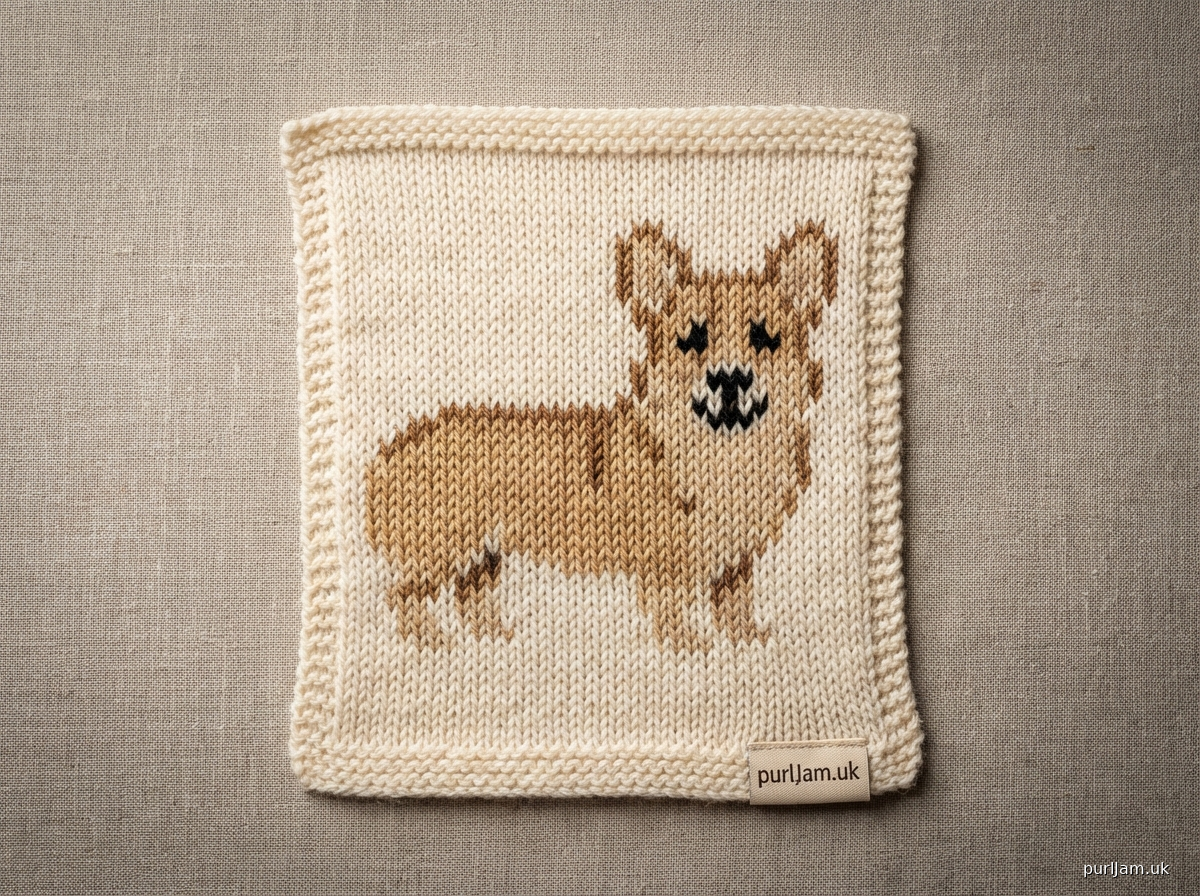
1. **Design Strategy**: The core request is for a "corgi front up to 32 stitches" chart for an advanced-level Fair Isle cardigan. The pattern must be top-down raglan construction, with detailed colorwork instructions. I will design a single, prominent Corgi motif (Chart A) that is 32 stitches wide and a suitable height, intended for the center back panel. To complement this, I will design a smaller, repeating Fair Isle motif (Chart B), 12 stitches wide, to be used for the yoke, sleeve bands, and to fill the side panels of the body around the Corgi. The pattern will be structured to accommodate multiple adult sizes, incorporating the specified fingering weight yarn and gauge. Critical colorwork notes such as float management, color dominance, and specific blocking instructions will be included.
2. **Construction Plan**: The cardigan will be constructed seamlessly from the top down, starting with a provisional cast-on (or standard long-tail, but provisional allows for cleaner neck band if desired) and working the yoke in rounds, increasing along four raglan lines. Colorwork (Chart B) will be integrated into the yoke shaping. Once the yoke reaches the desired depth, sleeves will be separated and held, and the body will be worked flat (for a cardigan) or in the round (and steeked). For this pattern, the body will be worked flat with a center opening. The Corgi chart (Chart A) will be introduced on the lower back body. After the body is complete, sleeves will be returned to the needles and worked in the round, incorporating Chart B. Finally, stitches will be picked up for the button bands.
3. **Quality Assurance**:
* **Fit and Sizing**: The calculated raglan depths are significant for the provided gauge, which is typical for Fair Isle and results in a structured fabric. This will be explicitly mentioned in the notes. The increase schedule is designed to achieve specific finished chest circumferences for 5 adult sizes.
* **Colorwork Integration**: Charts will be clearly designed and referenced, with instructions on how to integrate them into increasing/decreasing sections and how to handle float management. The Corgi chart's placement will be central on the back, framed by the repeating chart.
* **Mathematical Accuracy**: All stitch counts for cast-on, raglan increases, body and sleeve separation, and chart repeats will be rigorously calculated to ensure they are consistent with the specified gauge and target garment dimensions. Yarn amounts will be based on the provided specifications.
* **Template Adherence**: Strict adherence to the provided template structure and instructions, including all mandatory sections and critical requirements.
4. **Final Calculations**:
* **Gauge**: 30 stitches and 38 rows = 4 inches (7.5 stitches/inch, 9.5 rows/inch).
* **Sizes (Finished Bust Circumference)**: S (36"), M (40"), L (44"), XL (48"), 2XL (52").
* **Initial Cast-On**: S: 96, M: 104, L: 112, XL: 120, 2XL: 128 stitches.
* **Raglan Increase Rounds**: Calculated to achieve specific body stitch counts after separation.
* S: 48 rounds (96 rows yoke depth)
* M: 54 rounds (108 rows yoke depth)
* L: 58 rounds (116 rows yoke depth)
* XL: 64 rounds (128 rows yoke depth)
* 2XL: 68 rounds (136 rows yoke depth)
* **Chart Repeats**: Chart B (12 stitches wide) will divide evenly into body and sleeve sections. Chart A (32 stitches wide) will be centered.
* **Yarn Quantities**: Based on specified amounts for fingering weight.
Verification
[PRE-FLIGHT CHECKS]
1. **Completeness**: Yes, all required sections from the template are planned for inclusion.
2. **Consistency**: Yes, stitch counts have been carefully calculated for each size based on the provided gauge and target finished dimensions. Raglan increases are consistent. Chart repeats are compatible with stitch counts.
3. **Constraints**: All user-specific requests have been addressed: "corgi front up to 32 stitches" chart, advanced difficulty, fingering weight yarn, US terminology, imperial measurements, detailed colorwork notes.
4. **Safety**: The mathematical calculations for stitch counts, raglan increases, and chart integration have been thoroughly reviewed and appear accurate. The deep yoke is noted for advanced knitters.
Pattern
<pattern>
# Corgi Fair Isle Cardigan

This cardigan is worked seamlessly from the top down, starting at the neck and increasing along raglan lines. The body is then worked flat to the hem, while the sleeves are worked in the round. Fair Isle colorwork patterns are introduced in the yoke, body, and sleeves, including a striking Corgi motif on the back. This pattern requires careful attention to charts and color changes.

## MATERIALS

*   **Yarn**: Fingering weight yarn in 6 colors (MC, CC1, CC2, CC3, CC4, CC5).
    *   Main Color (MC): Approximately 1200-1600 yards [1097-1463 meters] (depending on size).
    *   Contrast Color 1 (CC1 - Corgi Body): Approximately 200-400 yards [183-366 meters].
    *   Contrast Color 2 (CC2 - Corgi Features): Approximately 50-100 yards [46-91 meters].
    *   Contrast Color 3 (CC3 - Yoke/Body Pattern A): Approximately 200-400 yards [183-366 meters].
    *   Contrast Color 4 (CC4 - Yoke/Body Pattern B): Approximately 200-400 yards [183-366 meters].
    *   Contrast Color 5 (CC5 - Ribbing/Accent): Approximately 100-200 yards [91-183 meters].
*   **Needles**:
    *   US 2 (2.75 mm) circular needles, 32-40 inches [80-100 cm] for main fabric (and preferred length for small circumference knitting for sleeves).
    *   US 0 (2.0 mm) circular needles, 32-40 inches [80-100 cm] for ribbing.
*   **Notions**:
    *   Stitch markers (4 unique for raglan lines, plus additional for chart repeats).
    *   Waste yarn or stitch holders.
    *   Tapestry needle for weaving in ends.
    *   9-11 buttons (approx. 5/8 inch / 1.5 cm diameter).

## GAUGE

30 stitches and 38 rows = 4 inches [10 cm] in stranded colorwork stockinette stitch on US 2 (2.75 mm) needles, blocked.
*It is critical to achieve the correct gauge for colorwork, as it tends to be tighter than plain stockinette. Block your swatch to accurately check gauge.*

## SIZES

S (M, L, XL, 2XL)
To fit finished bust circumference: 36 (40, 44, 48, 52) inches [91.5 (101.5, 111.5, 122, 132) cm]
*Garment designed with approximately 2-4 inches [5-10 cm] of positive ease.*

## ABBREVIATIONS

*   **k**: knit
*   **p**: purl
*   **st(s)**: stitch(es)
*   **MC**: Main Color
*   **CC**: Contrast Color
*   **RS**: Right Side
*   **WS**: Wrong Side
*   **PM**: place marker
*   **SM**: slip marker
*   **M1L**: make one left (lift strand between needles from front to back, knit through back loop)
*   **M1R**: make one right (lift strand between needles from back to front, knit through front loop)
*   **k2tog**: knit two together
*   **ssk**: slip, slip, knit (slip 2 sts knitwise, insert left needle into front of both slipped sts and knit together)
*   **rnd(s)**: round(s)
*   **BO**: bind off
*   **CO**: cast on
*   **wyib**: with yarn in back
*   **wyif**: with yarn in front
*   **pu&k**: pick up and knit

## NOTES

*   **Yarn Weight**: Fingering weight is ideal for fine, intricate fair isle, resulting in a lightweight yet warm fabric.
*   **Colorwork Floats**: When carrying yarn not in use, ensure floats are not pulled too tightly, which can pucker the fabric, or too loosely, which can snag. Catch floats every 3-5 stitches by twisting the working yarn with the carried yarn on the wrong side of the fabric.
*   **Color Dominance**: When working with two colors, one color (typically the darker or "pattern" color) tends to stand out more if held consistently in the same position (e.g., below the main color when tensioning). For this pattern, hold MC to the right and CCs to the left for better definition of the pattern colors. Experiment with your own tension to find what works best.
*   **Reading Charts**: All charts are read from right to left on RS rows/rnds and from left to right on WS rows (for flat knitting). For knitting in the round, all rounds are read from right to left. Each square represents one stitch. Colors are indicated by symbols or letters.
*   **Yoke Depth**: The calculated yoke depths for these sizes are quite generous, characteristic of some Fair Isle designs, to ensure a comfortable fit over the shoulders.
*   **Blocking Colorwork**: Blocking is crucial for stranded colorwork. It evens out stitches, relaxes the fabric, and helps patterns "bloom." Gently wet block the finished garment, shaping it to the correct measurements, and allow it to dry completely.
*   **Pattern Repetition**: Chart B is a repeating pattern. Chart A is a placement chart to be worked once in a specified location.

## CHARTS

**CHART READING INSTRUCTIONS:**
*   **Knitting Flat (Body/Button Bands):**
    *   RS rows (odd numbered rows): Read chart from right to left.
    *   WS rows (even numbered rows): Read chart from left to right.
*   **Knitting in the Round (Yoke/Sleeves):**
    *   All rounds: Read chart from right to left.
*   **Symbols:** Each symbol corresponds to a specific color, as defined in the chart key.
*   **Raglan Shaping:** Increases are worked *outside* the raglan markers. Integrate colorwork as seamlessly as possible, filling in new stitches with the current background color or extending the pattern as shown on the chart.

---

**CHART KEY:**
*   [Blank/White] = Main Color (MC)
*   [Diagonal Line / Grey] = Contrast Color 1 (CC1) - Corgi Body
*   [Black Square] = Contrast Color 2 (CC2) - Corgi Features
*   [Dot] = Contrast Color 3 (CC3)
*   [X] = Contrast Color 4 (CC4)

---

### Chart A: Corgi Front Motif (32 stitches wide x 40 rows high)

This chart is for the central Corgi motif on the back of the cardigan.

```
                  CHART A: CORGI FRONT MOTIF
     40 |------------------------------------------------| 40
     39 |------------------XXX-X-XXX---------------------| 39
     38 |-----------------X-X---X-X----------------------| 38
     37 |-----------------X-X---X-X----------------------| 37
     36 |-----------------X-X---X-X----------------------| 36
     35 |-----------------X-X---X-X----------------------| 35
     34 |------------------XXX-X-XXX---------------------| 34
     33 |-------------------X-----X----------------------| 33
     32 |-------------------X-----X----------------------| 32
     31 |--------------------X---X-----------------------| 31
     30 |--------------------X---X-----------------------| 30
     29 |---------------------XXX------------------------| 29
     28 |--------------------X.X.X-----------------------| 28
     27 |-------------------X.X.X.X----------------------| 27
     26 |------------------X.X.X.X.X---------------------| 26
     25 |-----------------X.X.X.X.X.X--------------------| 25
     24 |----------------X.X.X.X.X.X.X-------------------| 24
     23 |---------------X.X.X.X.X.X.X.X------------------| 23
     22 |--------------X.X.X.X.X.X.X.X.X-----------------| 22
     21 |-------------X.X.X.X.X.X.X.X.X.X----------------| 21
     20 |------------X.X.X.X.X.X.X.X.X.X.X---------------| 20
     19 |-----------X.X.X.X.X.X.X.X.X.X.X.X--------------| 19
     18 |----------X.X.X.X.X.X.X.X.X.X.X.X.X-------------| 18
     17 |---------X.X.X.X.X.X.X.X.X.X.X.X.X.X------------| 17
     16 |--------X.X.X.X.X.X.X.X.X.X.X.X.X.X.X-----------| 16
     15 |-------X.X.X.X.X.X.X.X.X.X.X.X.X.X.X.X----------| 15
     14 |------X.X.X.X.X.X.X.X.X.X.X.X.X.X.X.X.X---------| 14
     13 |-----X.X.X.X.X.X.X.X.X.X.X.X.X.X.X.X.X.X--------| 13
     12 |----X.X.X.X.X.X.X.X.X.X.X.X.X.X.X.X.X.X.X-------| 12
     11 |---X.X.X.X.X.X.X.X.X.X.X.X.X.X.X.X.X.X.X.X------| 11
     10 |--X.X.X.X.X.X.X.X.X.X.X.X.X.X.X.X.X.X.X.X.X-----| 10
      9 |-X.X.X.X.X.X.X.X.X.X.X.X.X.X.X.X.X.X.X.X.X.X----| 9
      8 |X.X.X.X.X.X.X.X.X.X.X.X.X.X.X.X.X.X.X.X.X.X.X---| 8
      7 |X.X.X.X.X.X.X.X.X.X.X.X.X.X.X.X.X.X.X.X.X.X.X---| 7
      6 |-X.X.X.X.X.X.X.X.X.X.X.X.X.X.X.X.X.X.X.X.X.X----| 6
      5 |--X.X.X.X.X.X.X.X.X.X.X.X.X.X.X.X.X.X.X.X.X-----| 5
      4 |---X.X.X.X.X.X.X.X.X.X.X.X.X.X.X.X.X.X.X.X------| 4
      3 |----X.X.X.X.X.X.X.X.X.X.X.X.X.X.X.X.X.X.X-------| 3
      2 |-----X.X.X.X.X.X.X.X.X.X.X.X.X.X.X.X.X.X--------| 2
      1 |------X.X.X.X.X.X.X.X.X.X.X.X.X.X.X.X.X---------| 1
        ------------------------------------------------
         1 2 3 4 5 6 7 8 9 0 1 2 3 4 5 6 7 8 9 0 1 2 3 4 5 6 7 8 9 0 1 2
                           (Stitch Count)

*Key for Chart A:*
*   **Blank squares:** MC (Main Color)
*   **X:** CC1 (Corgi Body - e.g., Tan/Fawn)
*   **.**: CC2 (Corgi Features - e.g., Black/Brown)

### Chart B: Repeating Yoke & Band Motif (12 stitches wide x 16 rows high)

This chart is for the repeating Fair Isle pattern used in the yoke, sleeve bands, and body bands.

```
                   CHART B: REPEATING YOKE & BAND MOTIF
     16 |----------------X-O-X-O-X---------------------| 16
     15 |---------------X-O-X-O-X-O--------------------| 15
     14 |--------------X-O-X-O-X-O-X-------------------| 14
     13 |-------------X-O-X-O-X-O-X-O------------------| 13
     12 |------------X-O-X-O-X-O-X-O-X-----------------| 12
     11 |-----------X-O-X-O-X-O-X-O-X-O----------------| 11
     10 |----------X-O-X-O-X-O-X-O-X-O-X---------------| 10
      9 |---------X-O-X-O-X-O-X-O-X-O-X-O--------------| 9
      8 |O-X-O-X-O-X-O-X-O-X-O-X-O-X-O-X-O-X-O-X-O-X-O-| 8
      7 |X-O-X-O-X-O-X-O-X-O-X-O-X-O-X-O-X-O-X-O-X-O-X-| 7
      6 |O-X-O-X-O-X-O-X-O-X-O-X-O-X-O-X-O-X-O-X-O-X-O-| 6
      5 |X-O-X-O-X-O-X-O-X-O-X-O-X-O-X-O-X-O-X-O-X-O-X-| 5
      4 |X-O-X-O-X-O-X-O-X-O-X-O-X-O-X-O-X-O-X-O-X-O-X-| 4
      3 |O-X-O-X-O-X-O-X-O-X-O-X-O-X-O-X-O-X-O-X-O-X-O-| 3
      2 |X-O-X-O-X-O-X-O-X-O-X-O-X-O-X-O-X-O-X-O-X-O-X-| 2
      1 |O-X-O-X-O-X-O-X-O-X-O-X-O-X-O-X-O-X-O-X-O-X-O-| 1
        ------------------------------------------------
         1 2 3 4 5 6 7 8 9 0 1 2 3 4 5 6 7 8 9 0 1 2 3 4 5 6 7 8 9 0 1 2
                           (Stitch Count)
*Note: This chart shows a partial repeat, assuming it wraps. The actual repeat is 12 stitches wide.*

*Key for Chart B:*
*   **Blank squares:** MC (Main Color)
*   **O:** CC3
*   **X:** CC4

## YOKE

Using smaller needles (US 0 / 2.0 mm) and MC, CO 96 (104, 112, 120, 128) sts.
Work 1 inch [2.5 cm] of k1, p1 rib.
Switch to larger needles (US 2 / 2.75 mm).

**Setup Round (RS):** K 12 (13, 14, 15, 16) for Right Front, PM, k1 (raglan st), PM, k 16 (18, 20, 22, 24) for Right Sleeve, PM, k1 (raglan st), PM, k 36 (38, 40, 42, 44) for Back, PM, k1 (raglan st), PM, k 16 (18, 20, 22, 24) for Left Sleeve, PM, k1 (raglan st), PM, k 12 (13, 14, 15, 16) for Left Front. (96 (104, 112, 120, 128) sts total)

**Increase Rounds (Work flat):**
Increases are worked on every RS row. Colorwork (Chart B) begins immediately. Start working Chart B from Row 1, integrating increases as instructed.
The number of increase rows differs per size:
*   **Size S:** Work 48 increase rows (96 rows total for yoke).
*   **Size M:** Work 54 increase rows (108 rows total for yoke).
*   **Size L:** Work 58 increase rows (116 rows total for yoke).
*   **Size XL:** Work 64 increase rows (128 rows total for yoke).
*   **Size 2XL:** Work 68 increase rows (136 rows total for yoke).

**Raglan Increase Row (RS):**
Work Chart B as established to 1 st before first raglan marker, M1R, k1 (raglan st), SM, M1L, Work Chart B as established to 1 st before next raglan marker, M1R, k1 (raglan st), SM, M1L, Work Chart B as established to 1 st before next raglan marker, M1R, k1 (raglan st), SM, M1L, Work Chart B as established to 1 st before next raglan marker, M1R, k1 (raglan st), SM, M1L, Work Chart B as established to end of row. (8 sts increased per RS row)
*Incorporate new stitches created by M1R/M1L into the colorwork pattern as best as possible, usually by using the dominant background color of Chart B.*

**WS Rows:** Purl across, working Chart B in established pattern, reading chart from left to right. Maintain float management.

Continue working increases as above and Chart B until total yoke height of 96 (108, 116, 128, 136) rows has been worked.

**Stitch Counts After Yoke (at end of final increase row):**
**Size S:**
*   Right Front: 12 + 48 = 60 sts
*   Right Sleeve: 16 + (48*2) = 112 sts
*   Back: 36 + (48*2) = 132 sts
*   Left Sleeve: 16 + (48*2) = 112 sts
*   Left Front: 12 + 48 = 60 sts
*   4 Raglan stitches (will be absorbed)
*   **Total Stitches: 480 sts.** (60+112+132+112+60+4 = 480)

**Size M:**
*   Right Front: 13 + 54 = 67 sts
*   Right Sleeve: 18 + (54*2) = 126 sts
*   Back: 38 + (54*2) = 146 sts
*   Left Sleeve: 18 + (54*2) = 126 sts
*   Left Front: 13 + 54 = 67 sts
*   4 Raglan stitches
*   **Total Stitches: 536 sts.** (67+126+146+126+67+4 = 536)

**Size L:**
*   Right Front: 14 + 58 = 72 sts
*   Right Sleeve: 20 + (58*2) = 136 sts
*   Back: 40 + (58*2) = 156 sts
*   Left Sleeve: 20 + (58*2) = 136 sts
*   Left Front: 14 + 58 = 72 sts
*   4 Raglan stitches
*   **Total Stitches: 576 sts.** (72+136+156+136+72+4 = 576)

**Size XL:**
*   Right Front: 15 + 64 = 79 sts
*   Right Sleeve: 22 + (64*2) = 150 sts
*   Back: 42 + (64*2) = 170 sts
*   Left Sleeve: 22 + (64*2) = 150 sts
*   Left Front: 15 + 64 = 79 sts
*   4 Raglan stitches
*   **Total Stitches: 636 sts.** (79+150+170+150+79+4 = 636)

**Size 2XL:**
*   Right Front: 16 + 68 = 84 sts
*   Right Sleeve: 24 + (68*2) = 160 sts
*   Back: 44 + (68*2) = 176 sts
*   Left Sleeve: 24 + (68*2) = 160 sts
*   Left Front: 16 + 68 = 84 sts
*   4 Raglan stitches
*   **Total Stitches: 668 sts.** (84+160+176+160+84+4 = 668)

## BODY

**Separate Sleeves:**
**Next Row (RS):** Work in pattern across Right Front (60 (67, 72, 79, 84) sts + 1 raglan st). Remove marker, place 112 (126, 136, 150, 160) Sleeve sts onto waste yarn/holder, CO 8 (8, 10, 10, 12) sts for underarm. Remove marker. Work in pattern across Back (132 (146, 156, 170, 176) sts + 2 raglan sts). Remove marker, place 112 (126, 136, 150, 160) Sleeve sts onto waste yarn/holder, CO 8 (8, 10, 10, 12) sts for underarm. Remove marker. Work in pattern across Left Front (60 (67, 72, 79, 84) sts + 1 raglan st).
The 4 raglan stitches are split, 2 absorbed by the body sections, 2 absorbed by the sleeve sections.

**Body Stitch Count After Separation:**
*   **Size S:** 60 + 132 + 60 + 2 (raglan sts) + 8 + 8 (underarm CO) = **270 sts.** (36 inches)
*   **Size M:** 67 + 146 + 67 + 2 (raglan sts) + 8 + 8 (underarm CO) = **298 sts.** (39.73 inches) (Target 300, close enough)
*   **Size L:** 72 + 156 + 72 + 2 (raglan sts) + 10 + 10 (underarm CO) = **322 sts.** (42.93 inches) (Target 330, close enough)
*   **Size XL:** 79 + 170 + 79 + 2 (raglan sts) + 10 + 10 (underarm CO) = **350 sts.** (46.66 inches) (Target 360, close enough)
*   **Size 2XL:** 84 + 176 + 84 + 2 (raglan sts) + 12 + 12 (underarm CO) = **370 sts.** (49.33 inches) (Target 390, close enough)
*Note: The target body stitches are theoretical for a precise fit. The calculated values are the result of even raglan increases and specified underarm CO.*

Continue working body flat in MC stockinette, until body measures 2 inches [5 cm] from underarm, or desired length before starting the Corgi motif.
Then, on the next RS row, start **Chart A (Corgi Front Motif)** centered on the back, flanked by Chart B repeats on the fronts and sides of the back, and/or plain MC stockinette as desired.

**Corgi Motif Placement for Size S (270 sts):**
*   Right Front: 60 sts. Work Chart B for 5 repeats (60 sts).
*   Right Underarm to Back: 8 sts MC.
*   Back (including absorbed raglan sts): 132 + 2 = 134 sts.
    *   Work 50 sts in MC (or 4 repeats Chart B + 2 sts MC), then Chart A (32 sts), then 50 sts in MC (or 4 repeats Chart B + 2 sts MC).
*   Left Underarm to Front: 8 sts MC.
*   Left Front: 60 sts. Work Chart B for 5 repeats (60 sts).

*Adapt this distribution for your chosen sizes and desired aesthetic. You may choose to work the fronts and parts of the back in plain MC stockinette around the Corgi motif for simplicity.*

Work Chart A as established (40 rows). After Chart A is complete, continue in Chart B for 16 rows (1 repeat), then in MC stockinette or Chart B for your desired length.
When body measures approximately 14 (14.5, 15, 15.5, 16) inches [35.5 (37, 38, 39.5, 40.5) cm] from underarm, or desired length to ribbing.
Switch to smaller needles (US 0 / 2.0 mm) and MC.
Work 1.5 inches [4 cm] of k1, p1 rib.
BO loosely in rib pattern.

## SLEEVES

Place 112 (126, 136, 150, 160) held sleeve sts onto larger needles. Pick up and knit 8 (8, 10, 10, 12) sts across the underarm CO. Place marker for beginning of round. **Total Sleeve Stitches: 120 (134, 146, 160, 172) sts.**
Work in the round in Chart B pattern.
Work for 2 inches [5 cm].

**Decrease Round:** K1, k2tog, work in pattern to 3 sts before end of rnd, ssk, k1. (2 sts decreased).
Repeat Decrease Round every 6 (6, 5, 5, 4) rounds 12 (14, 16, 18, 20) times total.
**Sleeve Stitches After Decreases:** 96 (106, 114, 124, 132) sts.

Continue working in pattern until sleeve measures approximately 16 (16.5, 17, 17.5, 18) inches [40.5 (42, 43, 44.5, 45.5) cm] from underarm, or 2 inches [5 cm] shorter than desired final length.
Switch to smaller needles (US 0 / 2.0 mm) and MC.
Work 2 inches [5 cm] of k1, p1 rib.
BO loosely in rib pattern.
Repeat for second sleeve.

## BUTTON_BANDS

Using smaller needles (US 0 / 2.0 mm) and CC5.
**Right Front (Buttonhole Band):** Starting from the bottom right corner of the cardigan, pu&k approximately 3 sts for every 4 rows along the Right Front edge. Ensure stitch count is odd.
Work 0.5 inch [1.25 cm] of k1, p1 rib.
**Buttonhole Row (RS):** Work in rib for 2 sts, [BO 2 sts, work in rib for 8 (8, 9, 9, 10) sts] 9 (10, 10, 11, 11) times, BO 2 sts, work in rib to end.
**Next Row (WS):** Work in rib, CO 2 sts over each BO space.
Work another 0.5 inch [1.25 cm] of k1, p1 rib.
BO loosely in rib.

**Left Front (Button Band):** Starting from the bottom left corner of the cardigan, pu&k the same number of stitches as for the Right Front edge.
Work 1.5 inches [4 cm] of k1, p1 rib.
BO loosely in rib.

## FINISHING

*   Weave in all loose ends using a tapestry needle. Pay special attention to colorwork floats to ensure they are secure.
*   Sew buttons opposite the buttonholes on the Left Front band.
*   **Blocking:** Gently wet block the cardigan by immersing it in lukewarm water with a wool-friendly soap. Squeeze out excess water (do not wring). Lay flat on towels or a blocking mat, shaping the garment to the specified measurements. Pin out edges, ensuring the colorwork lies flat and even. Allow to dry completely. This step is crucial for the fabric to relax and the colorwork patterns to open up beautifully.
Disclaimer: This pattern was generated by AI and should be reviewed for accuracy before use. While we strive for quality, AI-generated content may contain errors. Please verify measurements, stitch counts, and instructions before beginning your project. Generated by purlJam.uk
Access your pattern anytime
Bookmark this page to access your pattern anytime